You ask three plasterers for a quote and get three different numbers, sometimes $2,000 apart. None of them explains why.
Plastering pricing in Sydney isn’t random, but it isn’t transparent either. The final number depends on job type, wall condition, ceiling height, and a licensing rule most homeowners never hear about until it’s relevant.
This guide breaks down exactly what drives the price, what range is realistic for your specific job, and how to read a quote so you know if it’s fair before you sign anything.
Table of Contents
- Sydney Plastering Costs at a Glance
- Cost Per Square Metre by Job Type
- Plasterer Hourly and Daily Rates
- What Drives Your Final Price
- Why Sydney Costs More Than Other Cities
- The Licensing Rule Most Homeowners Don’t Know
- How to Read a Plastering Quote
- Red Flags in a Cheap Quote
- How to Save Money Without Cutting Corners
- Conclusion
Sydney Plastering Costs at a Glance
Most Sydney plastering jobs land between $20 and $90 per square metre, depending on the type of work. Small repair jobs are usually priced hourly instead, typically $60 to $90 per hour for a licensed plasterer.
A single bedroom ceiling replacement (around 12 to 15m²) generally costs $700 to $1,000 all in. Whole-house plastering jobs in Sydney commonly range from $10,000 to $15,000, scaling with house size and wall condition.
These are starting reference points, not your final number. The breakdown below shows where in that range your specific job will likely sit.
Cost Per Square Metre by Job Type
Plastering isn’t one job, it’s several different trades grouped under one name. Each has a different price because each requires different skills, time, and materials.
Plasterboard installation is the baseline. It’s the fastest and cheapest because it’s a sheet-fixing job rather than a wet trade.
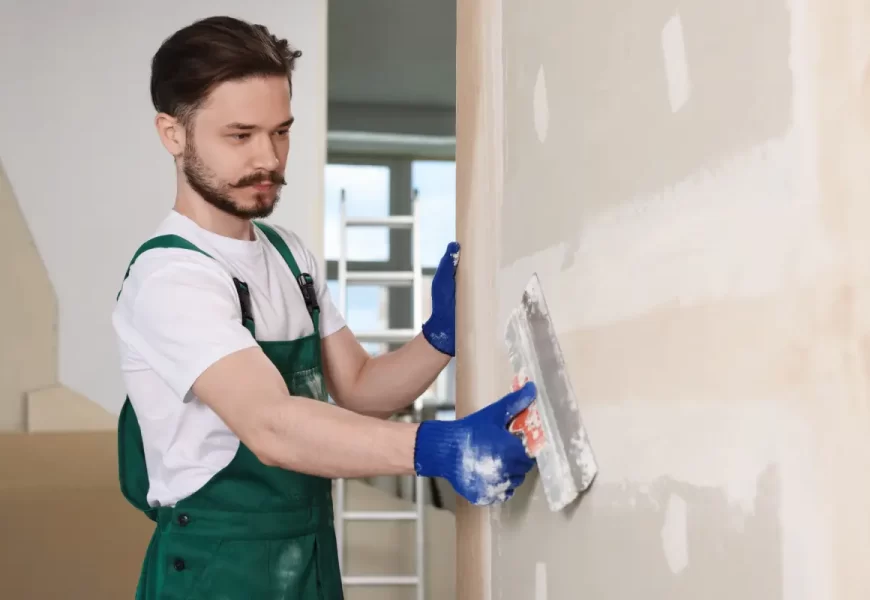
Skim coating and wet plastering cost more because they involve mixing, applying, and finishing material by hand, often in multiple coats. Ceilings cost more than walls across every job type because of access difficulty and overhead strain on the tradesperson.
| Job Type | Cost per m² (Sydney) | Notes |
| Plasterboard installation (supply + install) | $15–$30 | Most common job in renovations |
| Wall skim coat | $20–$25 | Restores old or damaged plaster |
| Ceiling plastering | $25–$40 | Higher due to access and overhead work |
| Wet/solid plastering | $45–$90 | Multi-coat, used on brick, stone, and concrete |
| Drywall installation | $20–$30 | Slightly more involved than standard plasterboard |
Plasterer Hourly and Daily Rates
For small jobs, most Sydney plasterers quote hourly rather than per square metre. Expect $60 to $90 per hour for a licensed tradesperson, with repair and texture-matching work sitting toward the higher end.
Matching an existing ceiling texture or blending a patch into the surrounding plaster takes real skill, and the rate reflects that. It’s not padding, it’s the actual difficulty of making a repair invisible.
Bigger jobs often shift to a day rate once the plasterer can work through multiple rooms in sequence. Day rates are generally more cost-efficient per square metre than several separate small callouts, because setup and cleanup time gets spread across more work.
What Drives Your Final Price
Five factors move your quote up or down from the baseline range. Surface condition matters most: a wall needing crack repair, old plaster removal, or filling costs more than a clean new-build wall ready for finishing.
Job size affects the rate inversely. A small patch job often quotes high per square metre because callout time, setup, and cleanup get amortised across less area, while a full-house job gets a lower per-m² rate because the plasterer works continuously.
Access and height push ceiling and stairwell work higher, since scaffolding or platforms are often required. Urgency adds a premium too. Sydney’s best plasterers are frequently booked weeks ahead, and squeezing into a tight schedule costs more.
Finally, finish type matters: a flat painted wall costs less than ornamental cornice work or decorative ceiling roses, which demand specialist skill. Like pricing on plantation shutters, plastering costs vary more by labour and access difficulty than by the raw material itself.
Why Sydney Costs More Than Other Cities
Sydney and Melbourne both sit at the top of the national pricing scale, generally $20 to $25 per square metre for standard work, compared to $15 to $20 in Brisbane. Higher labour costs and overheads in metropolitan areas explain most of the gap.
This isn’t price gouging. Tradespeople in Sydney face higher rent, insurance, vehicle costs, and demand for their time than tradespeople in regional NSW or smaller capital cities.
Hiring a plasterer local to your suburb, rather than one based far across the city, can reduce the travel-time component built into your quote.
The Licensing Rule Most Homeowners Don’t Know
In NSW, any plastering job worth more than $5,000 in labour and materials, including GST, legally requires the plasterer to hold a contractor licence. This applies to both dry plastering work, which covers plasterboard fixing, and wet plastering work, under rules set by NSW Fair Trading.
Doing this work without a licence can result in fines of $22,000 for an individual or $110,000 for a company, under the Home Building Act 1989. That penalty exists because unlicensed plastering work often skips proper qualifications, leaving you with structural or finish problems down the line.
This threshold matters for your decision-making. If your job is likely to exceed $5,000, which most full-room or whole-house jobs will, you should confirm the plasterer’s licence before signing anything. You can verify any NSW trade licence for free through the Service NSW licence check tool.
Established Sydney operators such as Pro Plaster N Paint in Sydney typically list their licensing and insurance status upfront on their site, which is the standard you should expect from any plasterer quoting work above the $5,000 threshold.
A quote from an unlicensed operator might look cheaper upfront, but you carry the legal and financial risk if anything goes wrong.

How to Read a Plastering Quote
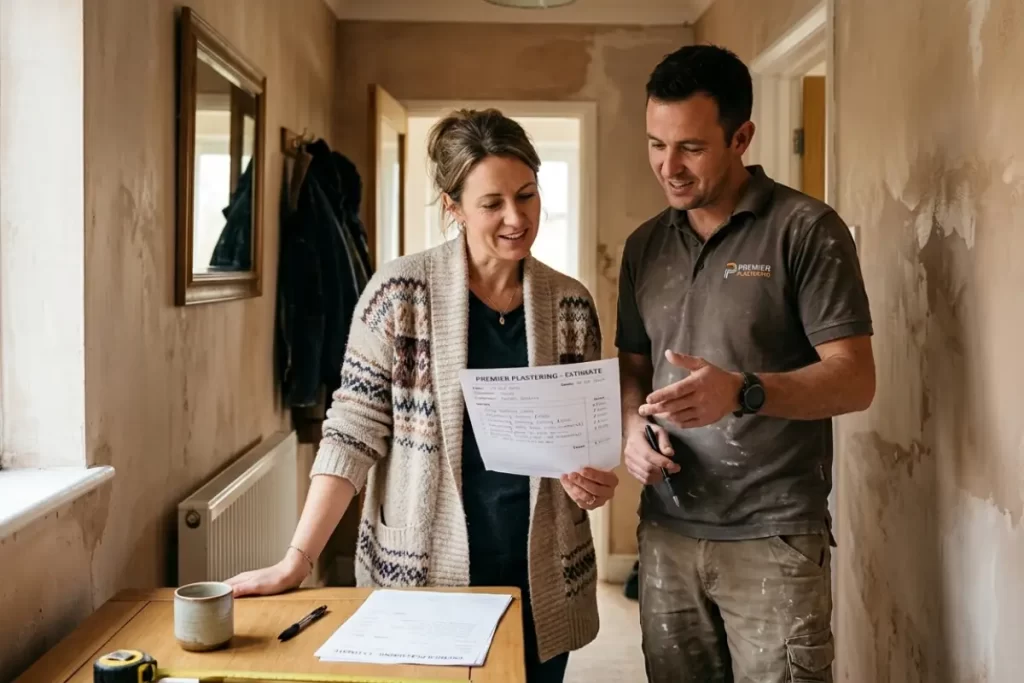
A proper quote separates labour from materials, even if it’s presented as one combined per-square-metre rate. Ask whether the number includes both, because a labour-only quote will look cheaper but leaves you sourcing plasterboard, jointing compound, and cornice separately.
Check whether the quote specifies the type of work: plasterboard install, skim coat, or wet plaster. A vague line item like “wall plastering, $1,200” tells you nothing about scope.
Confirm whether surface preparation, like removing old plaster or filling cracks, is included or billed as an extra once work starts. This is the single biggest source of quote disputes after the job begins.
Finally, ask if the quote is fixed-price or an estimate. Fixed price protects you from scope creep; an hourly estimate can expand if the job uncovers more damage than expected.
Red Flags in a Cheap Quote
A quote significantly below the $20–$90/m² range deserves a direct question: what’s being left out? Common shortcuts include skipping surface preparation, using a single coat where two are standard, or quoting labour only without disclosing it.
Be cautious of a quote with no breakdown at all, just a flat total. Legitimate plasterers can tell you roughly how they arrived at the number.
If a tradesperson can’t confirm a licence number for a job over $5,000, that’s not a minor omission, it’s a legal compliance issue that puts the cost of any future defect back on you.
How to Save Money Without Cutting Corners
Combine walls and ceilings into one job rather than booking them separately. One mobilisation for a plasterer is cheaper than two, since setup and cleanup costs are shared across more work.
Schedule plastering after electrical and plumbing rough-in is complete, not before. Reopening a freshly plastered wall to run new cabling is wasted money.
Plastering is usually scheduled before flooring goes in, so it’s worth comparing durable flooring choices at the same time you’re budgeting wall and ceiling work.
Fill small cracks and holes yourself before the plasterer arrives if you’re comfortable doing so. Reducing the prep work shrinks the billable hours on surface condition.
Book outside peak renovation season where possible. Demand drives urgency premiums, and a flexible start date can get you a better rate from an in-demand plasterer.
Conclusion
Sydney plastering costs range from $15 to $90 per square metre depending on job type, with plasterboard at the low end and wet plaster at the high end. Hourly rates of $60 to $90 apply to smaller repair jobs, while whole-house work typically runs $10,000 to $15,000.
The price you pay depends on surface condition, job size, access difficulty, and finish type, not just a flat citywide rate. Any job over $5,000 legally requires a licensed contractor in NSW, with real financial penalties for unlicensed work.
Homeowners budgeting for plastering often go through the same exercise elsewhere in the house, like weighing the cost of a gutter guard against the maintenance it saves.
Use the per-job pricing and the quote-reading checklist above to compare quotes properly, rather than picking the lowest number on the page.