On this page
- The break-even number is smaller than you think
- What styling costs in Sydney
- The hire period is where budgets break
- What the research actually proves
- Why the 2026 market changes the maths
- Where styling pays, and where it doesn’t
- The tips that carry the most weight
- The tax question most sellers skip
- The verdict: a half-percent bet on a $1.5 million asset
- Questions Sydney sellers ask about styling
Sydney’s median house value sits at $1,556,258 (Cotality, June 2026). A full styling package on a home at that price costs about $8,000. So styling only has to lift the final sale figure by 0.51% to pay for itself.
The market has made that harder. Sydney values fell 1.2% in June and now sit 3.7% below their January 2026 peak. Listings across the capitals are up 7.7% on last year. Buyers have more choice and more time.
Below are the real numbers: what Sydney stylists charge, what the research proves, and which homes earn the money back. The answer is conditional, and the conditions are specific enough to check against your own property.
The break-even number is smaller than you think
Most sellers compare the styling quote to their weekly budget. Compare it to the sale price instead, because that is the number styling is trying to move.
At Sydney prices, styling sits well under 1% of the asset value. The question stops being “can I afford $8,000” and becomes “will presentation move this price by half a percent”.
Here is the maths, using Cotality’s June 2026 Sydney medians.
| Property type | Sydney value | Styling spend | Break-even uplift | Gain at 1% uplift | Net result |
| 2-bed unit | $898,623 | $3,000 | 0.33% | $8,986 | +$5,986 |
| Median dwelling | $1,265,608 | $5,500 | 0.43% | $12,656 | +$7,156 |
| Median house | $1,556,258 | $8,000 | 0.51% | $15,563 | +$7,563 |
| North Shore family home | $2,500,000 | $12,000 | 0.48% | $25,000 | +$13,000 |
The break-even figure barely moves between tiers. Bigger homes cost more to style, but they are worth more too.
So the decision is not really about house size. It is about whether your property has a presentation problem worth half a percent.
What styling costs in Sydney
Sydney pricing splits by size, occupancy and suburb. Published stylist rates put full packages between $2,500 for a small apartment and $15,000 or more for a large prestige home.
A four-bedroom family home on the North Shore usually lands between $6,500 and $12,000. Across Sydney and the Northern Beaches, most full styles fall between $3,000 and $8,000.
Partial styling uses your existing furniture and adds selected pieces. It suits occupied homes and costs roughly a third to half of a full style.
Three things drive the quote more than anything else:
- Occupancy. Vacant homes need everything. Occupied homes may need three rooms lifted, not nine.
- Access. Stairs, lift bookings and street parking add installation hours.
- Inventory tier. Premium pieces cost more to hire.
For a benchmark quote on your own property, a specialist such as Creative Property Stylist will scope the rooms and hire period before pricing.
The hire period is where budgets break
This line item turns a sensible spend into a bad one, and almost nobody reads it closely.
Standard Sydney hire periods run six weeks, covering photography, pre-launch marketing and a four-week auction campaign. Past that, weekly extension fees apply, typically $300 to $600 depending on package size.
Run the numbers on a slow campaign. An $8,000 style that runs six weeks over adds $1,800 to $3,600, taking the total to between $9,800 and $11,600.
That pushes break-even on a median Sydney house from 0.51% up to 0.63%–0.75%. Still reachable, but the margin shrinks every week.
The risk is live right now. Combined-capital auction clearance peaked near 66% in early February 2026 and fell to the low 40s by June. Campaigns that used to clear at auction often don’t.
Ask before you sign: how many weeks are included, what the weekly extension costs, and whether furniture stays until contract or until settlement.
What the research actually proves
The strongest dataset is American. The National Association of Realtors surveyed 1,266 agents for its 2025 Profile of Home Staging.
Nearly three in ten agents (29%) said staging lifted the dollar value offered by 1% to 10%. Almost half (49%) saw it cut time on the market. Break that down and 19% reported a 1%–5% lift, 10% reported 6%–10%, and 12% said staging had no effect on buyers at all.
The clearest finding is about understanding, not price. 83% of buyers’ agents said staging made it easier for a buyer to picture the property as their own home.
Now the honest caveat. That is a survey opinion, not a controlled test of identical homes sold both ways. Nobody can run the counterfactual on a single property.
It matters because the bigger Australian claims are weaker still. Figures like “5% to 15% higher” and “$4,000 to $8,000 returned per $1,000 spent” appear almost only on the websites of businesses that sell styling, with no traceable research behind them.
Treat those as marketing. The defensible claim is narrower and still useful: styling improves how fast buyers understand a home, and a meaningful share of agents observe a 1%–10% price effect. On Sydney prices, the bottom of that range clears break-even twice over.
Why the 2026 market changes the maths
Presentation matters more when buyers have options, and Sydney buyers have plenty.
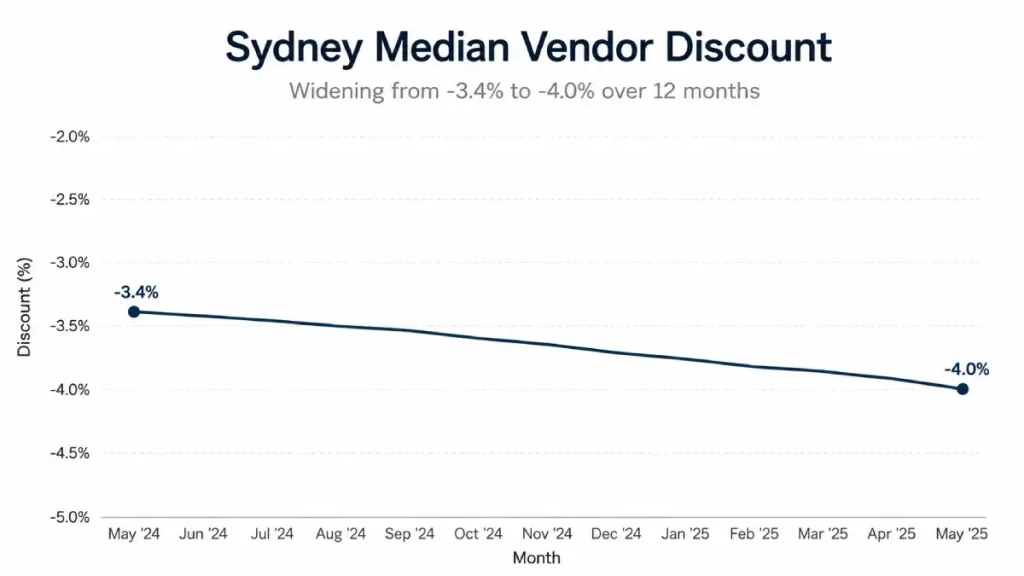
The median vendor discount across the combined capitals rose to 3.6% in the June quarter, up from 3.0% in March. In Sydney, it sits at -4.0%, against -3.4% a year earlier.
Put a dollar figure on that. On a $1.56m house, a 0.6 percentage point shift equals roughly $9,300 of negotiating power that moved from seller to buyer in twelve months. That is more than the cost of a full styling package.
Selling times agree. Cotality’s June 2026 Sydney data puts median days on market at 30, while a separate Cotality-sourced reading gives 37 days against 35 a year earlier.
Two things follow. The case for styling strengthens as buyers get more selective. The extension-fee risk grows at the same time, so budget beyond the standard package.
Where styling pays, and where it doesn’t
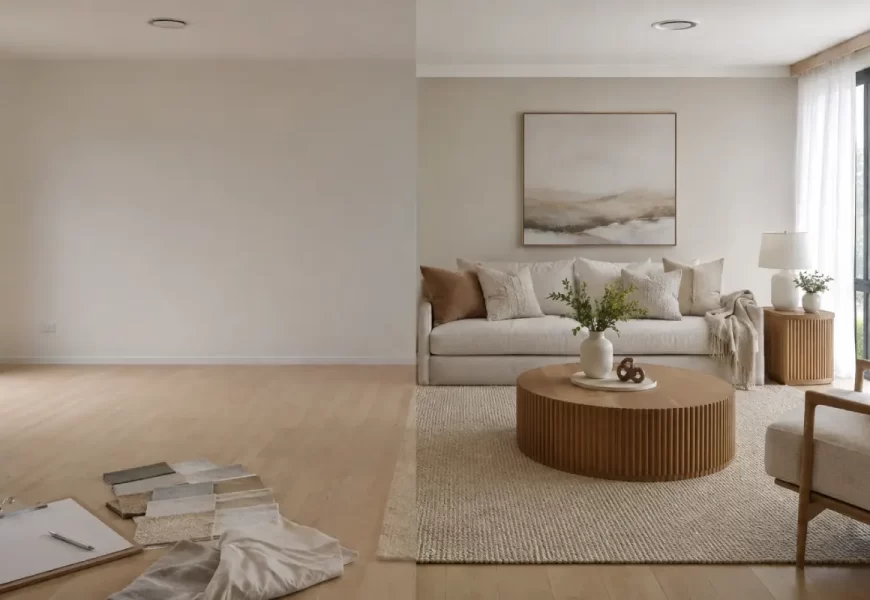
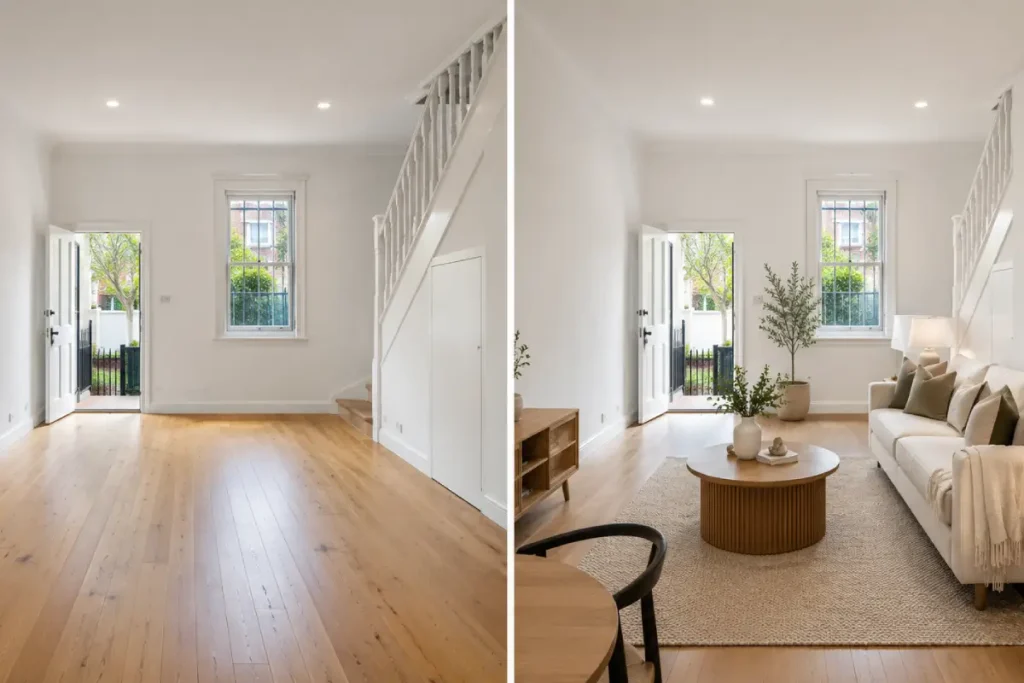
Vacant properties. Empty rooms read smaller and give buyers no sense of scale. An empty house also signals a motivated seller before anyone walks in. This is the clearest case for a full style.
Dated or awkward interiors. Styling won’t fix a 1985 kitchen, but it stops the kitchen from being the only thing a buyer remembers. Cracked or uneven walls are worth fixing before the stylist arrives, and plastering cost in Sydney typically add a few hundred dollars per room, well below what a visible defect costs you at negotiation. It also solves layout confusion in oddly shaped rooms.
Occupied homes that already look good. If your furniture is sound, correctly scaled and fairly neutral, a full style buys you less. A decluttering pass, partial styling and a good photography brief may capture most of the gain.
Skip it: when you are selling to developers or renovators, where land value drives the price. Skip it when tenants won’t cooperate on access and tidiness. And reconsider if the budget forces a choice between styling and repairing a visible fault. A buyer discounts a water stain by more than styling adds.
The tips that carry the most weight
Rooms do not return equally, and the NAR data is specific. Buyers ranked the living room most important to stage (37%), then the primary bedroom (34%), then the kitchen (23%). Sellers, meanwhile, staged dining rooms at 69%.
That mismatch is your instruction. If you cut scope, cut the dining room before the kitchen bench.
Priority order:
- Living room. The room that leads most listings.
- Primary bedroom. Scale the bed to the room. An oversized bed in a small bedroom hurts more than no bed at all.
- Kitchen. Clear every bench. Three objects maximum, all functional.
- Entry and hallway. The first four metres set expectations for the rest of the house.
Then the details that cost little:
- Right-size the furniture. The most common owner error is a family-room sofa in a terrace lounge. Smaller pieces make rooms look bigger.
- Fix the light first. Clean the windows, lift blinds fully, and match globe colour across each room. Mixed warm and cool globes photograph badly.
- Depersonalise selectively. Remove family photos and trophies. Leave books and plants.
- Style for the camera. Most buyers decide from listing photos. Ask which three shots the agent will lead with, then check those angles.
- Deal with smell. Pet odour, damp and smoke override every visual decision you made. Fix the source, not the fragrance.
- Do the front. Buyers park, look, and decide whether to get out. Edge the lawn, wash the door.
The tax question most sellers skip
The treatment depends on what the property is to you, and it changes the real cost.
For a family home, the CGT main residence exemption usually applies, so there is no gain to reduce. Styling is a straight cost. The $8,000 is $8,000.
For an investment property, it differs. The ATO’s cost base rules build the cost base from five elements, including incidental costs incurred when you sell, and exclude anything already claimed as a deduction.
Marketing and advertising costs to sell generally sit in that category. Styling engaged to market the property belongs alongside photography rather than being deducted from rental income.
So styling an investment property may reduce your assessable capital gain instead of costing the full amount after tax. I am not a tax adviser and your circumstances decide the answer, so confirm the treatment with your accountant and keep the itemised invoice.
The verdict: a half-percent bet on a $1.5 million asset
Usually, it pays, and the reason is arithmetic rather than taste. Styling costs 0.33% to 0.51% of a Sydney property’s value, so it only needs to shift the result by a fraction of one percent to break even. The bottom of the reported 1%–10% uplift range clears that comfortably.
But the honest answer is conditional. Styling pays the most on vacant homes, dated interiors and confusing layouts, because those are the properties buyers struggle to read. It pays least on occupied homes that already present well, on developer sales, and where the money would be better spent fixing a visible fault.
The evidence deserves the same honesty. The widely quoted 5%–15% Australian figures come from businesses selling styling, without traceable research behind them. What holds up is narrower: styling makes homes easier for buyers to understand, and agents widely observe faster sales.
The 2026 market cuts both ways. Softer values and more listings strengthen the case for presentation. The same conditions raise the odds of a long campaign and the extension fees that follow, which is why the hire period clause deserves more attention than the headline price.
Run the break-even number on your own property before deciding. If it has a presentation problem worth half a percent, styling is one of the cheapest levers in the whole sale. If it doesn’t, spend the money where it will actually change a buyer’s mind.
Questions Sydney sellers ask about styling
Between roughly $2,500 for a small apartment and $15,000 or more for a large prestige home. Most Sydney full styles land between $3,000 and $8,000, with four-bedroom North Shore homes at $6,500 to $12,000.
Six weeks is the Sydney standard, built to cover photography plus a four-week auction campaign. Extensions run $300 to $600 per week.
Partial styling is often enough. If your furniture is sound and correctly scaled, pay for a stylist consultation, then do the work yourself and hire only what you lack.
No, and be wary of anyone who says otherwise. Agent surveys report a 1%–10% price effect for a meaningful minority of listings, and 12% of agents report no effect on buyers at all.
Living room, primary bedroom, kitchen, in that order, based on what buyers themselves rank.
Extension fees on a slow campaign. With clearance rates in the low 40s, budget for the campaign running past the included hire period.